
$215 Million for Women's Health:
The Good, the Bad, and the Ugly
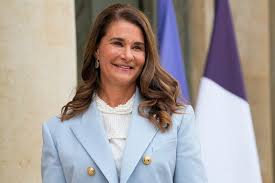
Last week, Melinda French Gates announced another $215M in funding through her organization Pivotal, focused on women’s reproductive and midlife health bringing her total commitment to women’s health to over $600 million in just two years.
The announcement made headlines. My inbox lit up. And I have thoughts… not just applause.
As a physician who has spent almost 20 years treating women whose health has been dismissed, defunded, and deprioritized by the very systems this money is meant to fix, I want to offer something more than a press release reaction. So let’s do what we do here: look at the whole picture.
The Good: Someone With Real Resources Is Paying Attention
Let’s start with what’s genuinely meaningful, because it is meaningful.
Women make up half the population and yet health issues that affect them receive only 2% of private healthcare funding, according to the World Economic Forum. That number should stop you cold. We are talking about half of humanity receiving a rounding error of research and investment attention. Against that backdrop, $600 million is not nothing.
The funding is focused on three critical areas: access to care during women’s reproductive years, health during midlife and menopause, and mental health — working through Pivotal’s three pillars of philanthropy, investment, and policy advocacy.
I want to highlight the menopause piece specifically, because it represents a real clinical gap. French Gates is donating $10 million to The Menopause Society for the education of healthcare professionals and to expand outreach in areas where access to menopause care is limited. At The Eudaimonia Center, I see the consequences of that gap constantly. Women in their 40s and 50s who have been told their symptoms are “just aging,” who have never had a meaningful clinical conversation about perimenopause, who have been left to manage a complex hormonal transition entirely on their own. Provider education in this area is not a luxury. It is overdue.
The director of the Menopause Society noted that the attention generated by French Gates may be even more important than the donation itself because it illuminates gaps and motivates action from others who might not have previously seen this as a viable area to fund.
Perhaps most importantly: French Gates is explicitly trying to signal to other billionaires and philanthropists, many of whom are currently avoiding women’s health for fear of retaliation from the Trump administration, that this is a space worth backing. In a political moment when reproductive health funding is under active assault, that signal matters.
The Bad: Philanthropy Was Never Supposed to Be a Healthcare System
Here is where I have to be honest, because I think the celebration around these announcements often skips past a structural problem that should concern all of us.
French Gates herself said it plainly in an interview: “I think philanthropy is going to fill a greater role than it ever has in the past because we are just not going to have the same type of government funding that we’ve had before.”
Read that again.
A billionaire is telling us that philanthropy will now fill the role that government used to play in funding women’s health research and care… and she’s probably right. But the fact that she is right is not something to celebrate. It is something to grieve, and then to fight.
French Gates acknowledged this tension directly: “Philanthropy can never, never fill the gaps that government leaves behind… What we can do is shine a light on these areas we ought to be investing in. These are models we are either setting up or seeing that can work. But then it really comes down to government funding these areas.”
The National Institutes of Health built this country’s biomedical infrastructure over decades. Between 2013 and 2023, only 8.8% of the NIH’s spending was allocated to women’s health research. That number was already insufficient. Now those budgets are being cut further, and we are looking to individual billionaires to absorb the gap? That is not a healthcare system. That is a patronage model which is inherently unstable, inherently unaccountable, and inherently dependent on the continued interest and goodwill of one wealthy individual.
What happens to women’s health funding when Melinda French Gates changes her priorities? When she dies? When her net worth contracts? These are not abstract questions. They are the structural vulnerability at the heart of any philanthropic solution to what is fundamentally a policy failure.
The Ugly: Who Gets to Define What Women’s Health Means?
This is the part of the conversation that rarely makes it into the headlines, and I think it’s the most important part.
There is a body of serious scholarly and activist critique of Melinda Gates’ philanthropic work, particularly as it has operated globally, that I will not pretend doesn’t exist. A 2023 Duke University thesis examined what scholars have called the “philanthrocapitalism” model of Gates Foundation health programs, tracing the throughlines between Western feminist frameworks, saviorism, and historical population control programs arguing that when wealthy Western philanthropists define the terms of reproductive health care for women in the Global South, the results can perpetuate the same paternalism they claim to disrupt.
I raise this not to dismiss the $215 million or to question anyone’s intentions. I raise it because as clinicians, as women’s health advocates, and as practitioners operating within a Womanist Ethic of Care, we are obligated to ask: Who is at the table when these funding decisions are made? Whose definition of women’s health is being resourced? Who is being helped, and on whose terms?
The Womanist tradition, rooted in Alice Walker’s philosophy and the reproductive justice frameworks developed by Black women organizers, has always insisted that the right to health is not just about access to care. It is about the right to define care for yourself, in your community, on your own terms. That is a fundamentally different claim than the one most philanthropic models make.
There is a growing movement within philanthropy toward trust-based and collaborative giving, models that hand decision-making power to nonprofit leaders and community groups on the receiving end, rather than concentrating it with the donor. That is a meaningful shift. But it is not yet the norm, and it is worth watching whether Pivotal’s model moves in that direction over its “testing phase.”
What I Want You to Take From This
Here is where I land, as a physician and as someone who has watched women’s health be underfunded, dismissed, and politicized for my entire career:
The $215 million is real, and it will do real good. Provider education on menopause, contraceptive access, maternal mental health integration are not symbolic investments. They will reach real women in real exam rooms.
And yet…
A donation is not a policy. A philanthropist is not a healthcare system. Attention is not accountability.
The most honest thing I can say is this. The fact that we are celebrating a single billionaire’s decision to fund women’s health research should be a source of both gratitude and fury. Gratitude for the women who will benefit. Fury that this is what the landscape has come to.
Your health was never supposed to depend on someone else’s generosity. It was supposed to be a right resourced by the systems we collectively fund and hold accountable. We are not there yet and no single $215 million donation, however well-intentioned, gets us there alone.
What gets us there is what has always gotten us there: women organizing, demanding, refusing to accept invisibility, and building the structures (clinical, political, and financial) that treat women’s health as essential. Not optional. Not charitable. Essential.
At The Eudaimonia Center, we believe that whole-person women’s health care is not a luxury and not a gift. It is what medicine was always supposed to offer. If you are ready to experience care that operates from that premise, complimentary consultations are open. Email Dr. White at info@laurenawhite.com.