
The Weight Nobody Talks About: Uterine Fibroids, Mental Health, and the Emotional Burden We've Been Asked to Carry Alone
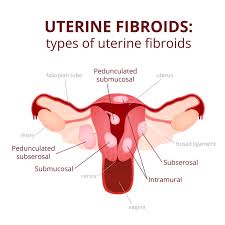
Every July, two important awareness campaigns share a calendar: Minority Mental Health Month and Uterine Fibroid Awareness Month. They are almost always treated as separate conversations. Two different social media graphics. Two different hashtags. Two different types of content.
And for millions of women, particularly Black women, these two things are not separate at all. They live inside the same body. They compound each other. And the fact that medicine, and even the wellness community, has treated them as parallel tracks rather than a single, interwoven experience is itself a form of erasure.
This post is for the woman who has been handed a fibroid diagnosis and told what her treatment options are, without anyone ever stopping to ask how she is doing. Not her hemoglobin. Not her uterine measurements. Her.
I want to hold intentional space for that today.
What We Talk About When We Talk About Fibroids
By the time most women are diagnosed, they have already spent years managing symptoms that were dismissed, minimized, or normalized. Heavy periods. Pelvic pressure. The particular exhaustion of chronic blood loss. Pain that was called “just bad cramps” by providers who did not look further.
By age 50, nearly two-thirds of women will experience uterine fibroids. Black women are diagnosed roughly three times as frequently as white women, develop them earlier in life, and tend to experience larger and more numerous fibroids causing more severe symptoms. Nearly a quarter of Black women between ages 18 and 30 already have fibroids compared to about 6% of white women. By age 35, that number rises to 60%.
An estimated 70 to 80% of Black women will harbor fibroids over their lifetime.
And yet the conversation about fibroids in clinical settings, in awareness campaigns, on social media — remains almost entirely focused on the physical: treatment options, surgical approaches, symptom management, fertility implications. These things matter enormously. But they are not the whole story. And for many women, they are not even the heaviest part of it.
The Emotional Weight the Research Confirms and Medicine Keeps Skipping
There is now a substantial body of research documenting what many women with fibroids have long known in their bodies without a citation: this condition takes a serious psychological toll.
A survey of 200 women with fibroids in London found that 35% scored in the borderline or clinical range for depression and 61% scored in the borderline or clinical range for anxiety. Not mild unease. Clinical levels of psychological distress in more than half of the women studied.
A 2026 narrative review published in the American Journal of Medicine and Health Studies, examining 16 studies published between 2014 and 2024, found consistent evidence that fibroid symptom severity is associated with diminished quality of life, anxiety, and depression, and that fertility concerns and treatment-related decision-making further compound that psychological distress.
Research has also documented a bidirectional relationship between psychological distress and uterine fibroids: the fibroids contribute to the mental health burden, and chronic psychological stress including the specific stress of navigating racism in healthcare is itself associated with increased fibroid risk and severity.
This is the part that should fundamentally change how we approach this diagnosis. It is not that fibroids cause stress the way a difficult commute causes stress. It is that chronic psychological distress, the kind that accumulates from years of dismissed pain, inadequate care, and the particular burden of being a Black woman in a medical system not designed with her body in mind, is biologically embedded in this disease’s progression. Chronic psychological stress, adverse childhood experiences, and perceived racism have all been associated with a higher risk of developing and experiencing severe symptoms from fibroids.
The mind and the uterus are not separate systems. They never were.
The Uterus Keeps the Score
A 2025 study published in the Journal of Health and Social Behavior examined how high-achieving Black women navigate chronic reproductive health conditions like fibroids and its title alone deserves to be read slowly: The Uterus Keeps the Score.
The research found that despite deeply scarring experiences of racism and sexism, Black women are still expected to perform with unflagging strength, an expectation that exacerbates both psychological and physical morbidity burdens. The study also found that the time and energy required simply to seek and receive treatment for fibroids was itself a health-depleting resource drain, noting that Black women may have less time available to engage in health-protective behaviors with deleterious implications for ongoing health and productivity.
I want to name what that actually means: the labor of getting care is itself making women sicker. The appointments rescheduled because work couldn’t accommodate them. The emergency room visits instead of specialist care because the waitlist was too long. The energy spent convincing a provider that the pain was real, the bleeding was heavy, the fatigue was not imagined… energy that could have been spent healing.
Research on Black women’s experiences with fibroids has found a cultural pattern of normalizing pain… “in our community, we normalize pain“… that, while rooted in resilience and survival, also delays diagnosis and discourages women from seeking care until their symptoms are severe.
This is not a character flaw. It is the predictable result of generations of medical dismissal. When your pain has been minimized enough times, you begin to minimize it yourself. The stoicism is adaptive. It is also, in the long run, costly.
What the Diagnosis Itself Does to a Woman
I want to slow down here, because this is what I rarely see discussed even in the most well-intentioned fibroid awareness content.
Receiving a fibroid diagnosis is not a neutral event. It arrives with freight.
For some women, it arrives with grief particularly when fertility is implicated. The question of whether you will be able to carry a pregnancy, or carry it to term, or do so without significant risk, is not a medical statistic. It is a reckoning with the future you imagined for yourself.
For others, the diagnosis arrives with relief… finally, a name for what has been happening. And then, quickly, with anger. Why did it take this long? Why did no one look sooner?
For many Black women, it arrives with a specific kind of exhaustion… the exhaustion of already knowing that the road to adequate treatment would require them to advocate loudly, to be disbelieved and then believed again, to navigate a healthcare system that has documented racial disparities in every dimension of fibroid care. Black women undergo fewer uterine-sparing treatments and minimally invasive procedures compared to white women, experience multilevel barriers that delay access to high-quality treatment, and report experiences of interpersonal racism and provider bias.
Half of the women surveyed in one study felt helpless and believed they had no control over their fibroids. Many expressed concern about appearing less attractive. Body image. Sexuality. Intimacy. These are the conversations that almost never make it into the clinical encounter.
The diagnosis, in other words, does not just happen to the uterus. It happens to the whole woman. And the whole woman deserves to be seen.
What “Comprehensive Care” Should Actually Mean
There is growing research consensus that fibroid care needs to integrate mental health assessment as a standard component… not only a referral made when things get bad enough, but also a built-in expectation from the beginning. The 2026 narrative review explicitly underscores the need for comprehensive, patient-centered approaches that integrate mental health assessment, reproductive counseling, and symptom management from the outset of fibroid care.
In practice, this means:
Asking not only “how heavy is your bleeding?” but also “how is this affecting your life?“… and meaning it. Holding space for grief when fertility is complicated. Acknowledging that the treatment decision itself… whether to pursue myomectomy, uterine fibroid embolization, ablation, or hysterectomy carries emotional weight that is not addressed in a pamphlet. Recognizing that Black women often arrive in the clinical encounter already carrying layers of prior dismissal, and that rebuilding trust is part of the therapeutic work. And understanding that a woman who seems to be “managing fine” may simply be performing the strength that has always been expected of her.
This is what the Womanist Ethic of Care asks of us: not only to treat the presenting condition, but also to hold the whole person. Not only to offer options, but also to witness the experience of navigating them.
To the Woman Reading This in the Middle of It
I want to speak directly to you for a moment.
If you are living with fibroids and you feel like you are falling apart, not only physically, but also emotionally, you are not being dramatic. You are not weak. You are carrying something genuinely heavy, and you have probably been carrying it longer than anyone around you realizes.
The grief is real. The anger is warranted. The exhaustion makes sense. The fear about your fertility, your body, and your future? These are not irrational responses to a benign condition. They are proportionate responses to a condition that has been undertreated, under-researched, and understated for decades, in the bodies of women who were already fighting to be believed.
You deserve a clinical encounter that begins with your experience, not only your imaging. You deserve a provider who asks how you are doing and waits long enough to hear the real answer. You deserve care that treats your mind and your uterus as what they are: connected, interdependent, and equally worthy of attention.
If you have not found that yet: that is a failure of the system. Not a reflection of your worth.
A Note on This Month
Minority Mental Health Month and Uterine Fibroid Awareness Month share July not by accident but by necessity because the populations most affected by both are often the same populations. Black women. Women of color. Women whose pain has been normalized, minimized, and deprioritized by the systems meant to care for them.
Raising awareness about fibroid symptoms and treatment options matters. But awareness without emotional acknowledgment is incomplete medicine. The goal is not just for more women to know what fibroids are. The goal is for more women to feel seen in the fullness of what fibroids do to their bodies, their minds, their relationships, their futures, and their sense of themselves.
That is the kind of awareness worth building toward.
At The Eudaimonia Center, we practice integrative reproductive medicine and women’s health care that holds space for the whole person… mind, body, spirit, and lived experience. If you are navigating a fibroid diagnosis and looking for care that takes your emotional well-being as seriously as your clinical findings, we are here. Book a complimentary consultation at theeudaimoniacenter.com.