
The Math Ain't Mathin': Rape Culture, Institutional Complicity, and the Bodies That Pay the Price
Content note: This post discusses sexual assault, rape, and institutional betrayal in detail.
I have been watching the Cornell case unfold this week… the way the country has ignited around it, the way the details keep emerging, the way the familiar machinery has already begun to spin and I want to write something that goes beyond outrage. Because the outrage is warranted, but the outrage alone will not save the next woman.
What happened at Cornell is not extraordinary. That is the point. A 20-year-old woman went to a fraternity party to meet someone she thought was her friend. She was drugged. Seven men allegedly raped her over the course of hours. One of them, according to the lawsuit, sent a message to a fraternity group chat advertising there was “free pussy upstairs” so that more men could participate. She reported it three weeks later. No criminal charges were pursued in 2024. Two of the seven men were expelled. Five received lesser consequences… suspensions, workshops, written assignments. The fraternity was temporarily closed. She left Cornell.
The district attorney, it emerged this week, had not even seen the transcript of her initial police statement when he declined to pursue the case two years ago. He has now reopened the investigation.
She filed a civil lawsuit. The country is now paying attention.
And I have to ask, “Why does it always take this much?
The Math We Keep Refusing to Do
Here is a set of statistics I want you to sit with before we go any further.
1 in 4 undergraduate women experiences rape or sexual assault during college. 1 in 3 who attend four or more years. 99% of campus rapists are male. Fraternity members are 300% more likely to rape than other male students. 84% of college men who committed rape said what they did was definitively not rape. Less than 7% of reported college rape cases result in criminal charges. Only 6% of perpetrators face any jail time at all.
And the statistic that reframes everything else: in 49 out of every 50 rape cases, the alleged assailant goes free.
Rape, more than murder, more than robbery, more than assault, is by far the easiest violent crime to get away with in this country.
Now consider the framing you grew up with. The one that told women and girls: don’t walk alone at night. Don’t drink too much. Don’t dress like that. Don’t go upstairs. Don’t trust a man you just met. Don’t. Don’t. Don’t.
And notice who that framing never addressed. Notice the boys who were never taught that a person who cannot consent cannot consent. Notice the men who were never asked to examine the group chats, the culture of entitlement, the way that “boys will be boys” functions not as a description but as a permission structure.
The math ain’t mathin’.
How We Got Here: The Architecture of Rape Culture
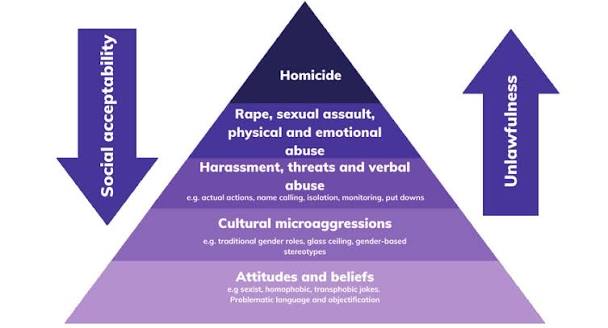
Rape culture is not a personality flaw. It is not a generation’s worth of bad apples. It is a structure… built deliberately, maintained institutionally, and reproduced socially that makes sexual violence predictable, excusable, and survivable for perpetrators in ways it never is for survivors.
Let me trace the architecture.
The burden of proof lives in the wrong body. We have built a legal and cultural system in which a woman alleging rape is, functionally, guilty of lying until she can prove otherwise. She must remember every detail perfectly. She must have reported immediately. She must not have been drinking, not have known her attacker, not have texted him afterward, not have taken any time to process what happened to her before she could name it as what it was. As Jane Doe’s own documents reveal: a roommate told investigators that Doe had not yet used the word “rape” in the days after the incident because, as her sorority big sister explained, “she had not yet processed what had happened.” That statement was used, functionally, against her.
Meanwhile, 84% of men who committed rape said it wasn’t rape. Their certainty is never the problem. Her uncertainty is.
Alcohol is a gendered weapon in these proceedings. A woman who was drinking is held responsible for what was done to her. A man who was drinking is absolved of what he did. Both were present at the same party. Both consumed substances. Only one of them is asked what she was wearing. Only one of them is asked why she was there. This is not logic. It is politics. Specifically, it is the politics of who deserves protection and who deserves blame.
Institutions have more to lose from accountability than from cover-up. Cornell is not unusual in what it appears to have done and what it failed to do. Universities across the country make calculated decisions about the reputational cost of expulsion versus the reputational cost of a lawsuit, about donor relationships, about athletics programs, about the families of men who pay full tuition. Title IX was meant to change this calculus. It has not changed it enough. The same week the DA admitted he had not read the survivor’s initial statement before declining to prosecute, Cornell was issuing press releases about how it had responded “appropriately.” The machinery of institutional self-protection runs faster and quieter than the machinery of justice.
Boys are not taught that they can rape someone they know. We have spent decades teaching women to fear the stranger in the alley, a scenario that accounts for a small fraction of actual assaults. 60% of rapes involve perpetrators known to the victim. 69% are described as a friend or acquaintance. The men in the Cornell case were not strangers. They were classmates, fraternity brothers, members of an institution. And like 84% of men who commit rape, many of them appear to have believed (or claimed to believe) that what happened was consensual. This is not a coincidence. It is the product of a culture that has never required young men to develop a rigorous, affirmative understanding of consent and that has actively protected them from the consequences when they didn’t.
The Dimensions We Don't Talk About Enough
Watching 13 Reasons Why, however dramatized, captures something that purely clinical or journalistic framings of sexual assault often miss: the full architecture of harm that surrounds a single assault. Not only the act itself, but also everything that happens afterwards. That is where most of the damage accumulates. And it is where most of the institutional failure occurs.
The denial. The men deny wrongdoing. The institution says it responded appropriately. The DA says he had good reasons. Everyone has a version of events that does not include their own culpability. The survivor is left to carry the weight of a story that everyone around her is actively working to revise.
The protection of the accused. Five of the seven men at Cornell received written assignments as a consequence for an alleged gang rape. Written assignments. The institution protected its investment in these students… their tuition, their futures, their families’ networks and called it due process. This is not a Cornell-specific pattern. This is how institutional responses to sexual assault have functioned across higher education for decades: designed to manage liability, not to deliver justice.
The ridicule of the survivor. She left Cornell. She did not get to finish her education at the institution she chose, in the cohort she enrolled with, on the timeline she had planned. Her alleged attackers, at least for a time, did not. This is perhaps the most consistent pattern in campus sexual assault cases: the survivor’s life is disrupted in ways that are specific, measurable, and permanent. The perpetrators’ disruption, when it occurs at all, is temporary.
The familial and relational rupture. Sexual assault does not happen in a vacuum. It happens inside relationships… with friends, with sorority sisters, with people who knew both parties and are suddenly forced to take sides. Jane Doe spoke to her sorority big sister the morning after. That conversation became evidence. The people who should have been her support system became witnesses in a proceeding designed to adjudicate her credibility. The relational cost of assault, the friendships that fracture, the communities that choose sides, the isolation that follows is enormous, and it is almost never accounted for in how we measure harm.
The somatic toll. As a physician, I cannot write this post without naming what sexual assault does to the body. Not just in the immediate aftermath, the physical injuries, the toxicology, the rape kit that may or may not be processed. But over time. The nervous system of a survivor of sexual assault is changed. Hypervigilance. Disrupted sleep. Hormonal dysregulation driven by chronic stress activation. Higher rates of autoimmune conditions. Depression and PTSD with documented physiological substrates. The body keeps the score, to borrow the phrase, in ways that outlast every legal proceeding, every institutional statement, every round of press coverage.
We do not talk about this enough. We talk about whether charges will be filed. We do not talk about what her endocrine system looks like five years from now.
Why Institutions Keep Protecting Predators
I want to answer this question directly, because it deserves a direct answer.
Institutions protect predators because the cost-benefit analysis, as currently structured, makes protection rational.
A university that expels an accused student faces potential litigation from his family, loss of his tuition, reputational risk among prospective students who identify with the accused rather than the survivor, and the administrative cost of a full investigation. A university that gives five men written assignments faces a civil lawsuit eventually, two years later, if the survivor has the resources and the fortitude to pursue it, in a legal system designed to be expensive, slow, and retraumatizing.
The calculus only changes when the cost of cover-up exceeds the cost of accountability. That is what is happening at Cornell right now not because the institution suddenly developed a conscience, but because the public pressure, the civil lawsuit, the DA’s reopened investigation, and the New York Attorney General’s involvement have shifted the math.
This is why survivors who speak publicly, who file suits, who go to journalists, who refuse to disappear, are doing something that is simultaneously deeply personal and structurally necessary. They are changing the cost-benefit analysis. They are the reason the math ever changes at all.
The Question Nobody Asks Men
Women and girls can almost always name someone who has been sexually assaulted. Very few men can name someone they know who has raped someone.
The math does not support this discrepancy. The perpetrators exist. They are in these communities. They are at these parties. They are in these group chats. The absence of knowing is not innocence. It is a choice… cultural, social, and psychological, not to look directly at something that would require a response.
35% of male college students, in some studies, admit to acts that meet the legal definition of rape when those acts are described behaviorally rather than labeled. That is not a small number. That is not a few bad actors. That is a pattern so widespread it implicates the culture that produced it and that means it implicates the men who were in that culture, knew what was happening, and did nothing.
“Boys will be boys” is not a description. It is a permission structure. It is the sentence that allows adult men to claim the moral exemption of childhood precisely when accountability would be most warranted. It is, functionally, a pre-emptive pardon issued before the crime, accepted by the institution after, and enforced by everyone who decides that his future matters more than her survival.
What This Has to Do With Women's Health
I am a women’s health physician. Some readers may wonder what a rape case at Cornell has to do with integrative gynecology, hormonal health, and the conditions I treat every week.
Everything. It has everything to do with it.
The women in my practice who carry histories of sexual assault and they are not rare, because 1 in 4 is not rare do not leave those histories at the door. They carry them into the exam room. They carry them into pelvic exams that require enormous trust to tolerate. They carry them into conversations about their hormonal health, their sleep, their pain, their autoimmune flares, their inability to explain to the last three doctors why their body feels like it is in a constant state of emergency.
Because it is. Because their nervous system learned, at some point, that the world was not safe and it has not unlearned that lesson, because nobody told it it was allowed to.
The Womanist Ethic of Care that guides this practice insists that we cannot treat a woman’s body without understanding the conditions that shaped it. A uterus that has been through trauma is not just a reproductive organ. A nervous system that has been through assault is not just a stress response. A woman who has been blamed, disbelieved, and discarded by every institution that was supposed to protect her does not arrive at a new clinical encounter with uncomplicated trust.
We meet her where she is. ALWAYS.
What Needs to Change & What You Can Do Right Now
The Cornell case will continue to unfold. There will be more hearings, more statements, more coverage. Some of the men may face criminal charges. Some may not. The institution will continue to manage its liability. The survivor will continue to live with what happened to her in the fall of 2024.
And the next case will come. It always does.
Here is what I want you to hold:
Believe survivors first. Not uncritically, not absent due process, but as a default stance rather than as a conclusion requiring proof. The false report rate for sexual assault is 2–10%. That means 90–98% of reports reflect something real. Skepticism as a default is not neutral. It is a choice with a known cost, and that cost is paid by survivors.
Teach consent as an affirmative, ongoing practice not an absence of “no,” but the presence of enthusiastic, capacitated “yes.” Have this conversation with the young men in your life. Not once. Repeatedly. With specificity.
Hold institutions accountable for their math. When a university gives a man a written assignment for an alleged gang rape, name it. Say it out loud. Write to the board. Show up at the hearing. File the complaint. The cost-benefit analysis only changes when the cost of complicity rises.
Support survivors in the ways they actually need. Not the ways that are comfortable for you. Ask. Listen. Do not require her to process on your timeline or perform her trauma in ways that are legible to you. Her uncertainty, her delay, her complicated feelings about what happened… these are not evidence of dishonesty. They are evidence of humanity trying to survive something catastrophic.
And if you are a survivor reading this: you were not responsible for what was done to you. The institution that failed you was wrong. The system that made you carry this alone was wrong. You are believed here.
At The Eudaimonia Center, we hold space for the full complexity of what women carry including what they have survived. If you are looking for care that meets you there, consultations are open. Visit us at theeudaimoniacenter.com.
If you or someone you know needs support: RAINN National Sexual Assault Hotline, 1-800-656-HOPE (4673) · rainn.org · Crisis Text Line, Text HOME to 741741.